

By Shane Konarowski
Few materials carry as much history as Murano glass. The small island in the Venetian lagoon has been shaping molten glass for over 700 years, and the tradition still shapes how we think about color, light, and craftsmanship in design.
How It Began
Glassmaking in Venice goes back to the early medieval period, but the story of Murano as we know it starts in 1291. The Venetian Republic ordered its glassmakers to move their furnaces to the island of Murano. The official reason was fire safety, since Venice's buildings were mostly wood. The move also let the Republic guard its valuable trade secrets.
The glassmakers became both celebrated and closely controlled. Masters enjoyed unusual privileges, and their daughters were permitted to marry into noble families. They were also forbidden to leave the Republic, and those who took their craft abroad could be pursued.
The Renaissance Breakthroughs
Murano's reputation was built on innovation. In the 15th century, the Barovier family, one of the oldest names in glassmaking, helped develop cristallo, a remarkably clear glass that imitated rock crystal. Other signature techniques followed:
Lattimo: an opaque milk-white glass resembling porcelain
Aventurine: glass flecked with shimmering metallic inclusions
Millefiori: "a thousand flowers," made by fusing patterned canes of colored glass
Filigrana: delicate threads of white or colored glass embedded in clear glass
Murano mirrors: some of the finest in Europe
For centuries, Venetian glass was the luxury standard across European courts.
Decline and Revival
By the 17th and 18th centuries, competition from Bohemian crystal and English lead glass cut into Venice's dominance, and the fall of the Republic in 1797 hit the industry hard. The 19th century brought a revival, led by figures such as Antonio Salviati, who reestablished Murano as a center of artistic glass and helped restore its international reputation.
The 20th Century: Glass Meets Modern Design
The 20th century was a turning point. Murano furnaces began working with architects, painters, and designers rather than relying solely on traditional forms. Names like Venini, Barovier & Toso, Seguso, Salviati, Mazzega, and Vistosi became synonymous with modern Italian glass, and designers such as Carlo Scarpa, Paolo Venini, Fulvio Bianconi, and Ercole Barovier pushed the material in bold new directions.
A Special Time: 1970s Murano Glass and Designer Collaborations
If you collect or style vintage pieces, the 1970s is a fascinating decade. Italian design was at its confident, experimental peak, and Murano's master glassmakers, known as maestri, were paired with designers eager to test what the material could do.
What Defined the Look
Saturated color: amber, smoky grey, deep green, orange, and rich blues
Bold, sculptural, often oversized forms
Heavy sommerso (layered color submerged in thick clear glass)
Lighting as sculpture, including chandeliers, mushroom table lamps, and pendant fixtures with a space-age feel
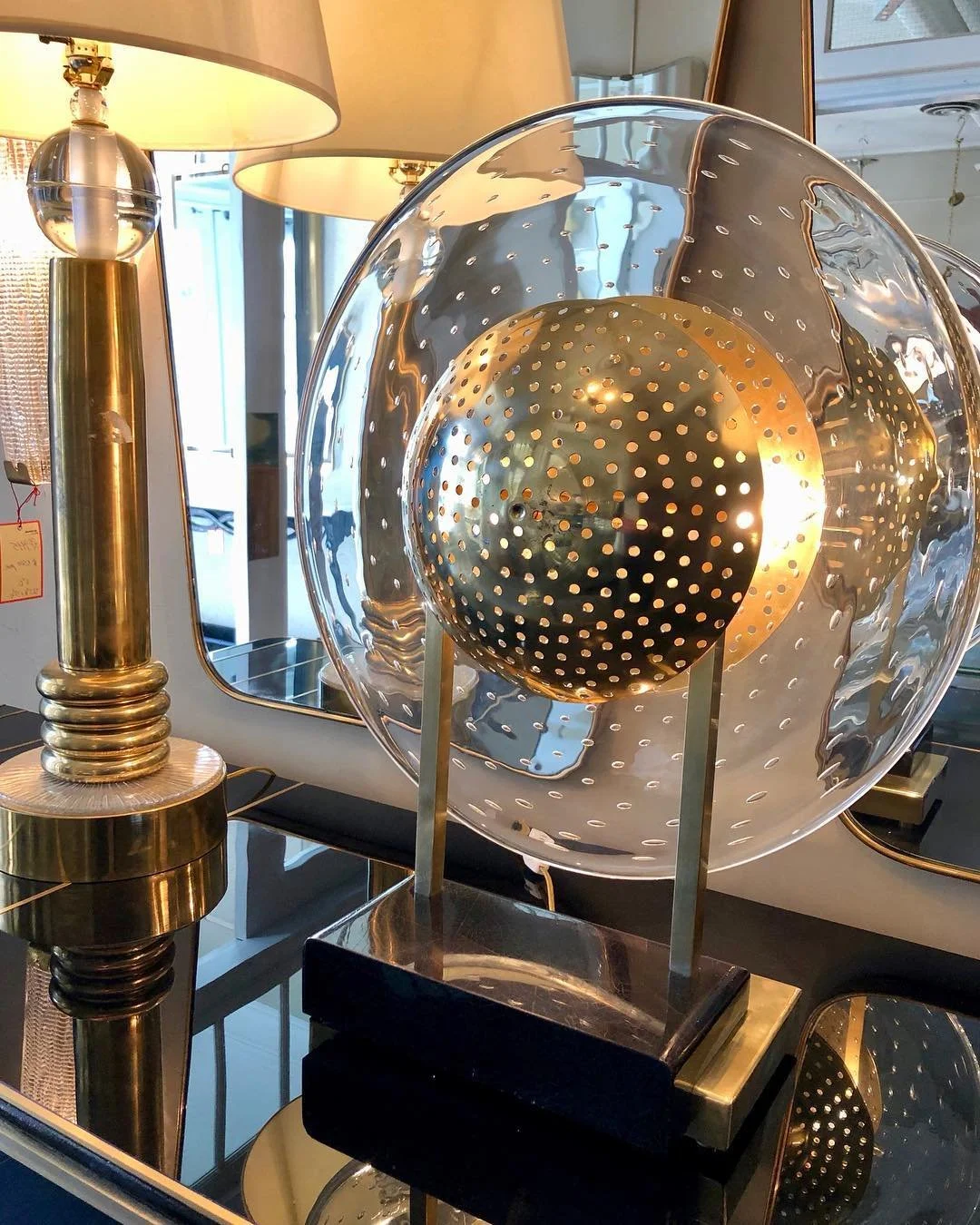
Murano Glass Ornament with Backlighting
Collaborations and Names to Know
Venini: Famous for working with outside designers. Finnish designer Tapio Wirkkala and Italian designer Ettore Sottsass are among the notable names associated with its output in this era, and the firm continued to champion artist-designer partnerships.
Mazzega: Known for lighting and glass pieces, including designs by Carlo Nason, whose geometric and faceted work is highly sought after.
Toni Zuccheri: Associated with Venini and other Murano firms, known for sculptural animals and organic forms.
Vistosi: A leading force in modular and sculptural glass lighting.
Seguso Vetri d'Arte and Barovier & Toso: Both continued to blend heritage techniques with contemporary design.
Why the Decade Matters Now
Mid-century and 1970s Italian glass has seen a strong resurgence among interior designers and collectors. The pieces work as statement accents in modern spaces because they combine centuries-old technique with a distinctly retro-futurist attitude.
Collecting Tips
Look for signatures, labels, or paper stickers, though many authentic pieces are unmarked.
Check for pontil marks (the ground or rough spot on the base) and weight. Handmade glass has subtle variation.
Beware of mass-produced imitations. Origin and reputable dealers matter.
Closing Thought
Murano glass has survived politics, competition, and changing taste because it keeps reinventing itself. From medieval furnaces to 1970s design icons, each era has added something new while honouring the craft. Bringing a piece into your home means owning a small part of that story.